Category: News Archive

Knowing the difference between sight vs. visual processing

When it comes to learning, visual processing can affect how a student performs. The ATT in collaboration with Walder Education offered an informative and practical professional development session on Visual Processing, presented by Dr. Neil Margolis, O.D., a board-certified developmental optometrist. 

Dr. Margolis defined and described the different visual processing skills and their application to learning. Sight refers to seeing clearly while visual processing refers to the brain’s ability to use and interpret visual information. Students whose academic performance does not meet aptitude predictions may have visual processing weaknesses. 

Dr. Margolis explained that vision is the understanding and interpretation of what one sees. A person’s vision cannot be measured like eyesight because vision itself is cortical, using the whole brain. When efficient, vision is thought to account for up to 80 percent of learning. 

When inefficient, it interferes with learning.

Visual processing skills

There are many areas of learning where visual processing skills come into play. Some of these areas include learning to read, reading to learn and copying information accurately.  

Specific examples of visual processing skills include: 

  • Recognizing known words correctly when reading
  • Navigating the page accurately when tracking
  • Checking copying accuracy
  • Judging spacing 
  • Layout as well as remembering and visualizing what one sees

Poor tracking causes a student to lose his or her place, skip words when reading, and misread known words. Teachers can raise awareness by observing a child’s posture, horizontal head turn, vertical head tilt, and blinking or winking. 

Visual-spatial skills affect the navigation aspect of tracking, organizing spacing when copying, direction of letters and words, and lining up columns. This will affect a student who is struggling with this skill in the following ways:

  • Determining where to go next on the page
  • Spacing between letters and words and size of letters and words
  • Finding the correct spot when looking back and forth
  • Discriminating between the letters “b” and “d”, was and saw, numbers 13 and 31
  • Understanding math diagrams & graphs

Support for visual processing

Fortunately, many of the activities to build visual processing skills can be fun and enjoyable for students. Puzzles and games are great ways to help students strengthen their visual spatial skills. As students self-regulate their learning, they need visual discrimination. This includes noticing differences between similar words and letters as well as noticing errors of copying.

Students can learn to check their work and start to notice directional differences. The students reading accuracy may be affected by misreading similar-looking words. Visual discrimination requires noticing differences based on size, color, shape, internal detail, orientation, pattern, internal or external features. 

Teachers and parents can help students improve visual discrimination by using tools and techniques. Matching objects based on criteria of color, shape, size can be helpful, especially for younger children. Matching pictures, patterns, or word searches is a useful technique.  

Using multiple criteria, having them spot the difference or correct an error can help them develop skills. It’s also beneficial to have students sort objects in a hands-on approach with sorting coins to build visual discrimination skills. Students can also list words having the same beginning or ending sounds. 

Helpful accommodations 

A teacher can help by circling differences the student may not have noticed in copying. By highlighting the beginning or ending of words before reading, teachers can provide extra support for the student to gain skills independently. 

There are many helpful accommodations to make the lesson more accommodating to students with visual processing disorders. Some of these include: 

  • Use highlighters
  • Use different colors
  • Increase white space on the page or increase the spacing between lines
  • Cover non-relevant components
  • Put less on the page
  • Use bigger print
  • Stand against a plain background
  • Read slower
  • Use text to speech software
  • Specifically point at a figure or word or have the student use his or her finger on the page to keep track

Dr. Margolis stressed the importance of the appropriate classroom accommodations that can be used to support students having visual processing difficulties. Because visual processing affects classroom performance, it’s important to address correctable visual skills. 

One way to do this is to help students notice what is relevant to the task or situation. This will ultimately build student self-esteem and confidence as the child uses effective effort and practice to achieve better outcomes in learning.

Visual memory also influences learning. This type of memory includes working memory (both short and long-term) affecting recall and recognition of letters, words, and sight word vocabulary. Often there is visualization through verbalization. This helps a child visualize objects, words, sentences, and paragraphs of information to aid in learning as visual memory is necessary for recall and comprehension.

By recognizing the difference between sight and visual processing, educators will be better equipped to help students thrive in learning by giving them the support they need.  

Sight vs. Visual Processing – Knowing the Difference

Presented by Dr. Neil W. Margolis, O.D., F.C.O.V.D
Presented in collaboration with Walder Education of Torah Umesorah

ATT in collaboration with Walder Education offered a very informative and most useful professional development session on Visual Processing, presented by Dr. Neil W. Margolis, O.D., F.C.O.V.D., a board-certified developmental optometrist.  Dr. Margolis defined and described the different visual processing skills and their application to learning. Whereas sight refers to seeing clearly, visual processing refers to the brain’s ability to use and interpret visual information. Students whose academic performance does not meet aptitude predictions may have visual processing weaknesses.

Eyesight of 20/20 has little to do with how the information is processed or understood. Vision is the understanding and interpretation of what is seen. A person’s vision cannot be measured like eyesight because vision itself is cortical, utilizing the whole brain. When efficient, vision is thought to account for up to 80% of learning and when inefficient, it interferes with learning.

Dr. Margolis stressed that adequate visual processing skills are required for:

  • Learning to read
  • Reading to learn
  • Copying accurately

And he provided specific examples of visual processing skills such as:

  • Recognizing known words correctly when reading
  • Navigating the page accurately when tracking
  • Checking copying accuracy
  • Judging spacing and layout
  • Remembering and visualizing what one sees

Poor tracking causes a student to lose his/her place, skip words when reading, and misread known words. Teachers should observe a child’s posture, horizontal head turn, vertical head tilt, and blinking/winking. Visual spatial skills affect the navigation aspect of tracking, organizing spacing when copying, direction of letters and words, and lining up columns. This will affect a student who is struggling with this skill in the following ways:

  • Determining where to go next on the page
  • Spacing between letters and words and size of letters and words
  • Finding correct spot when looking back and forth
  • Discriminating between b/d, was/saw, 13/31
  • Understanding math diagrams & graphs

Puzzles and games can help students strengthen their visual spatial skills.

As students self-regulate their learning, they need visual discrimination. This includes:

  • Noticing differences between similar words/letters
  • Noticing errors of copying
  • Checking one’s work
  • Noticing directional differences
  • Reading accuracy – misreading similar looking words

Visual discrimination requires noticing differences based on size, color, shape, internal detail, orientation, pattern, internal or external features. Ways to improve visual discrimination include:

  • Matching objects based on criteria of color, shape, size, etc., especially helpful for younger children
  • Using multiple criteria
  • Picture matching/pattern matching/word matching/word search
  • Spotting the difference/error correction
  • Sorting objects/coins
  • Listing words having the same beginning/different endings and visa/versa

A teacher can help by circling differences not noticed in copying and highlighting the beginning or ending of words before reading. Other ways to compensate for students with difficulties in visual discrimination are:

  • Use highlighters
  • Use different colors
  • Increase white space on the page – larger spacing between lines
  • Cover non-relevant components
  • Put less on the page
  • Use bigger print
  • Stand against plain background
  • Read slower
  • Use text to speech software
  • Specifically point at a figure/word – child uses finger on the page

Visual memory also influences learning. This type of memory includes working memory (both short and long-term) affecting recall and recognition of letters/words/sight word vocabulary. Often there is visualization through verbalization. This helps a child visualize objects, words, sentences, and paragraphs of information. Visual memory is necessary for recall and comprehension.

Dr. Margolis stressed the importance of the above appropriate classroom accommodations that can be used to support students having visual processing difficulties. Because visual processing affects classroom performance, it is important to address correctable visual skills. One way to do this is to help students notice what is relevant to the task or situation. This will ultimately build student self-esteem and confidence as the child uses effective effort and practice to achieve better outcomes in learning.

How to increase student participation with Zoom

After 10 months in a global pandemic, keeping classes Zoom engaging remains challenging. Though it’s impossible to simulate the energy from a classroom experience, there are tools and techniques to make learning virtually more optimal and enjoyable. 

ATT’s Chani Friedman shared essential aspects of the remote environment from a physical and an emotional perspective with ATT teachers. These are factors that every teacher must consider when planning a Zoom lesson. 

The physical Zoom environment 

Teachers pour effort and energy each year into making sure their classroom is an appealing and effective learning space. With virtual learning, there is less time spent making bulletin boards and more time learning how to make Zoom learning more appealing. 

You don’t have to get a green screen or spend hours perfecting your background. However, Zoom presenters must make themselves visible and interesting. Make sure to pay attention to your background, position and lighting. Adjust your camera position because how the audience sees you as the presenter affects their engagement in the presentation. 

When missing so much of the energy from the classroom, your facial expressions as a teacher can still serve to keep students engaged. That means smiling and appearing approachable to minimize the feeling of being on autopilot for lessons. 

Breaks are even more crucial during remote learning. After 15-20 minutes of instruction, be sure to take a break. This could be an exercise break, a question, poll or asking students to react to something. The more you can get them actively engaged, the more enjoyable the lesson will be. 

Technology provides the ability for continued effective education during the pandemic. However, when there is a glitch or something isn’t clear, it can be frustrating for even the most motivated students. To enhance clarity, screen share your document, especially the daily agenda or lesson plan. 

The emotional Zoom environment 

The importance of connecting with students in any classroom environment cannot be over-emphasized. In the Zoom environment, this can be a challenge. Try saying each child’s name throughout lessons. Keep a daily checklist when you name a child or give them active roles in class that day to ensure that each student is participating. 

Take time to promote questions, comments or reactions from students. The Zoom chat feature is excellent for getting students involved. Allowing students to be the presenter at times and share is a great way to get them to actively participate. You can make one student at a time the “chat monitor” on a rotational basis. 

Students thrive with structure and routine, so create as much structure and predictability as possible on Zoom. By posting the schedule and needs for materials and texts on a daily basis, students will know what to expect and be more prepared. Especially with students in younger grades, ensure that parents are clear on directions and expectations. 

While it’s important to create an organized online classroom, there should also be an emphasis on creating a warm virtual experience for students. Try playing music as the class starts or during attendance. 

Choose words and phrases that are motivational. For instance, “You have several choices to consider,” “Your next challenge is,” “Here are three things to try.” In each of these instances, the pronoun “I” is intentionally omitted to place the emphasis on the student. 

To make the virtual classroom feel warmer, use techniques to build community. One technique to try is when you join the classroom, have students turn on and off their camera as an answer to a question. For example, ask students to turn the camera on if they are feeling happy, tired, or any other emotion. You can also use an emotion wheel with faces to provide a visual for students.

Together as a class you can create a “gratitude slide” with an image to stress feelings of appreciation or thanks. Ask students what they are grateful for on an individual level, as a class or a community. You can use the chat feature to make this even more interactive. 

Internal Zoom tools

Taking the time to familiarize yourself with Zoom’s capabilities will greatly improve the effectiveness of learning remotely. Set the Zoom meeting to mute microphones upon entry to keep it organized. 

You can use the screen share feature and its tools such as the whiteboard, ability to annotate shared documents, share files and audio. Be sure to always check your Zoom meeting feature settings before you start your session. You can also use breakout rooms for short periods of time to have students discuss topics. 

To promote active participation, enable the Zoom poll or ask a question with chat. Chat can be to everyone or you can have students send responses directly to the host when necessary. The chat must be monitored and it can be set to save automatically for future reference. 

Non-verbal feedback within Zoom is a great way to get feedback easily from students. Students can give a thumbs up, show their paper to the camera or use a hand signal. In a 20-30 minute lesson, stop every so often and request some student participation to keep them actively involved in the learning. You can use a side by side view when you share your screen so the students can see both the teacher and material. 

External program tools 

Zoom’s built-in programs offer interactive tools to make learning more engaging. For even more engagement, there are many online programs that you can use to enhance virtual education:

Math and reading tools

Engaging tools

Make time for games or brain breaks during remote learning

When you need a break or want to incorporate some fun into learning, there are an overwhelming amount of games and online resources. We’ve narrowed it down to some favorites with some possible applications: 

  • Word-maker: How many words can you make from a larger word? Display your word on the shared screen.
  • Whiteboard ideas: Hangman – using Hebrew or English words.
  • Pictionary: Create teams with a designated drawer (rotate drawer role) Students draw a picture/scene having to do with the lesson and classmates guess it; the student needs access to the whiteboard and you can also use the private chat.
  • Scattergories: Color with a letter, any category with a letter – Judaic or general studies.
  • Four-square: Name, place, animal, thing in 4 squares – can use specific alphabet letters.
  • Boggle: Points for words that are not shared.
  • Fact or Fiction: A derivation of the 3 truths and 1 lie activity. Give students three facts and one false fact about a particular topic. Use the chat to have each student figure out the wrong fact. This can be used as a review activity or just for fun.
  • National Geographic: Online ready-made trivia games
  • Surveys and Polls
  • Bingo: Use whiteboard or shared screen for visuals: create your own related to your lesson content. Create a BINGO board. You can use Hebrew fonts, as well.
  • Dress up game: Relate this to your class content.
  • Create a story: Open a word document on a shared screen. Teacher starts a story and types it. Go around the class. Each student adds a sentence. Teacher can type the sentence as it is said.
  • Classroomscreen.com: You’ll need to sign in to use timers, stoplight, clock, choose students, dice, textbox, drawing tool.
  • Kahoot.it: Multiple choice quiz maker.
  • Triviamaker.com: Can use Hebrew fonts too.
  • Read together: Put pages of a book (or find a story online) into your PowerPoint and read as a class. You can unmute student microphones that are doing the reading. You can actually read a book as well and use the camera.  The website vooks.com  allows teachers a free account for a year due to the pandemic. 
  • Show and tell: Using the camera can be very effective.
  • Word find/search: You can create Judaic ones with Master Teacher in DavkaWriter – use your shared screen to annotate as an activity related to your lesson content.
  • Eye spy: Google them or create your own related to your lesson content.
  • Flashcards: Both Judaic and general studies. You can create your own related to your lesson content.
  • Quizlet.com: Creation of flashcards, use of created sets of cards – free sign up, will take Hebrew fonts – create your own related to your lesson content.

Lesson Planning for Chumash

By Rabbi Avrohom Moller

When planning for teaching Chumash, there are three levels of planning necessary:

  1. The annual plan is the overarching goals and content paced out for the year.In this process, the teacher identifies the learning standards which they are expected to meet over the course of the upcoming school year.
  2. The unit plan prepares a group of lessons for 2-3 weeks. It focuses on the specific themes and concepts that are unique to this unit and identifies effective instructional methods to teach them. Summative assessment should be planned for the unit as well.
  3. The daily lesson plan is the actual choreography of what will happen in the classroom on a daily basis. It includes the content to covered, the methods that will be used, the timing of the lesson, the materials and activities that will be needed and how the lesson will be evaluated for effectiveness so that the teacher is certain that the students “got it”..
teaching chumash

These planning phases are necessary when teaching any content but this discussion will focus on the specific considerations when teaching Chumash.

A rich curriculum in any subject includes a focus on content, skills and a hierarchy of skills. When it comes to Chumash, our goal is for students to view the text as a Divine text(תורה מן השמים) which serves as a guide to our lives. It is written in a unfamiliar language which the students needs to master and, at the same time the student needs to absorb the content, analyze it and adopt it to their lives. As the student progresses, he/she needs to become more analytic by applying more sophisticated thinking skills and also open to multiple readings and commentaries.

The planning process for teaching chumash

Annual Plan: The first phase of planning involves clarifying the content to be taught over the year, the standards of learning and the time available to teach the content. This information is provided by the instructional administrator and it is important to have complete clarity about the standards so that they can guide all of the instructional activities. The school calendar should be studied and all of the time allocated for Chumash identified. A pace for the learning should be established with the recognition that not every posuk will take the same amount of time to teach to the standard.

Unit Planning: The next step is to plan the units. Different sections of Chumash lend themselves to building different skills. Some contain important hashkafa or halach. Some units can teach language skills such as numbers. Some can be used to teach gathering information and tabulating it. At this point it is important to make sure that the standards that are being used are developmentally correct. If the students aren’t cognitively ready for certain information it will quickly become frustrating for them. An example is teaching Hebrew verb conjugations based on tense and/ or person when the student has no concept of these ideas in their mother tongue.

Daily Lesson Planning: The daily lesson plan is a careful choreography of what will actually occur in the classroom. It includes the instructional plan and the timing of execution. It contains everything that the teacher needs to prepare in advance, materials, technology, supplies, etc. It describes activities such as frontal learning, games, cooperative learning, independent learning, and how these will advance the goal of meeting standards. The lesson objective will be a clear description of what the student will be able to do if the lesson is successful. The assessment will plan how the teacher will be able to demonstrate that the lesson was successful.

Hunter’s Model for Lesson Planning:

Madeline Hunter (1916-1994) formulated some of the key components of successful lessons. Many have created lesson plan templates based on her formulation. It is a good practice to incorporate this template in the instructional section of the lesson plan.

Elements of a solid lesson plan:

  • Anticipatory set: the hook and bridge of prior knowledge 
  • Objective and purpose: tell students where one is going
  • Input: what students need to understand the lesson
  • Modeling: show them what they’re learning in a concrete way
  • Check for understanding: a variety of strategies to assess learning
  • Guided practice: do something together with the students and check on their progress
  • Independent practice: give students time to work independently
  • Closure: wrap up, the lesson and reflect on learning

Hunter’s elements do not make up the whole plan since teachers need to add time management, activities, materials and differentiation for a complete plan. Good lesson plans ultimately benefit teachers by making them more prepared, creating lessons of high quality and providing clarity for all.

ATT Annual Campaign with the 2020 Rabbi Isaac Mayefsky Memorial Lecture

Close to 1000 viewers joined the Associated Talmud Torahs on Motzaei Shabbos, November 28, 2020, to participate in the 34th Annual Rabbi Isaac Mayefsky Memorial Lecture and the launching of the ATT’s annual campaign and week of community-wide inspiration and virtual learning. The annual parenting program, sponsored by the Mayefsky family in memory of Rabbi Isaac and Mrs. Florence Mayefsky, featured the captivating speaker and renowned scholar, Rabbi YY Jacobson.


The presentation, entitled Keeping Positive in an Age of Uncertainty, focused on strategies for dealing with the effects of the current pandemic.


Rabbi Jacobson opened with a tribute to the ATT and Rabbi Isaac Mayefsky, z”l, as he explained the importance of leaving no child behind. The attitude to children has to be: “I believe in you and I will not let any child fall through the cracks.” This is a testimony of Achdus in a community with the goal to let every child continue to sit in the laps of our forefathers and matriarchs with Yiras Shamaim, Ahavas HaTorah, hope, dignity and inner confidence that defines the eternity of the Jewish people. He quoted the Ponevezher Rav, the Steipler, who noted than an orphan is a child without parents. But an orphan generation is a generation without children. Children are the “anointed ones” – each child has the power to change the world and every child can find his/her place in our people.


So how does one stay positive in this age of uncertainty and insanity – one that has created fear and anxiety that has overwhelmed all of us. Rabbi Jacobson suggested the following ideas:

1)     One needs to be upbeat for the immune system to operate on a level of optimal health. One must eat well, sleep, exercise, and maintain a positive attitude for the physical immune system to do its part.


2)     Everyone is going through so much with the lockdowns, job effects, quarantines, etc. To combat this, one needs to keep a spirit of simcha in the house.

3)     Maintain an environment of connection – the Lekovitcher Maggid says: Hashem told Noach (Bereishis 7:1) You and your household should go into the “teivah.”The word teivah means Ark but the Baal Shem Tov says it also means “word”. The Lekovitcher Maggid teaches that when there is a flood outside, all of you have to enter into dialogue – conversation. When there’s a flood – a pandemic – and uncertainty outside, make sure there is communication between husband and wife, between parents and children – talking AND listening to the best of our ability. This will enhance relationships which create emotional connections.


4)     The Sefer Beis Aharon, a commentary on Chumash, written by Rav Aharon of Karlin says on Parashas VaYeitzeh: (Bereishis 28: 10,11) “And Yaakov went out of Beer Sheva and went to Charan. And he encountered the place (“makom”) …and he slept at that place.”
The Medrash Rabbah says that the word “makom” – place is a euphemism for Hashem – the Omnipresent – for He constitutes the space of the universe. In fact, this is the first place in the Torah where Hashem is mentioned in this way. So why doesn’t the posuk just say that Yaakov met Hashem? Why is this reference of “space/place” made at this point in the Torah? Rav Aharon of Karlin explains: In Shma it says: (Devarim 6:5) “And you should love Hashem with all of your heart.” Rashi explains there: “all of your heart” means that “your heart should not be divided or at variance (in a fight) with the “space” (Hashem).” You must always be at peace with G-d. A person might think – “If only…” this or that conceptually, existentially, or emotionally, things would be different. Those two words do not allow us to make peace with our situation. We need to remember that G-d is always present in our reality – you are never a victim of your reality. This, in fact, is where Hashem has placed you and you will find your purpose if you allow yourself to rise to the occasion. It is easy to surrender to a place/circumstance. Don’t! Hashem sent you there – embrace it with your tools even when there is pain and there are tears. This will be the place where you can find your deepest self. Don’t squander the opportunity – flex your muscles and bring out the best in yourself. It is an opportunity from Hashem.
So, in our present age of uncertainty – one place to start is to develop one’s relationship with one’s spouse and children. All of our lives have changed and we are living in difficult circumstances. We need to see ourselves, not as victims, but instead in a position to encounter G-d emotionally, physically, and psychologically. We need to say to ourselves, “My purpose is here.” The worst thing about a crisis is to squander the opportunity to rise to the occasion and grow. These are times to create our best marriage, intensify relationships with children, relate to Hashem one-on-one in our Tefillah, the way for us to connect to Him. We can take the challenges of today and the pain and change them into opportunities for self-awareness, extraordinary growth, deeper relationships with loved ones, maturity, and self-discovery. How can we become ambassadors for light, love, and hope? This is a time to be there for each other. We must ask ourselves, “what can I do for my community, for others, for my family?” It can be a gesture – a text, a phone call, words of encouragement to a spouse, a child, a neighbor, a relative, a principal, a teacher. Be a source of love, strength, and inspiration. You must always be at peace with G-d – make peace with every situation and accept the challenge. “Carpe diem” – “seize the day,” suck the marrow out of the “space,” and you will find your real self and make true meaning out of the situation.


This lecture is part of the ATT’s expanded program designed to address the challenges of creative teaching and rewarding parenting. Over the years, it has become an excellent resource for parents of children of all ages. Rabbi Isaac Mayefsky was a gifted educator who, in the course of more than 40 years of communal service, developed many key programs within the Associated Talmud Torahs, including the Russian Transitional Program and the Oscar & Bernice Novick P’TACH Program. The ATT’s annual campaign and week of community-wide inspiration and virtual learning will culminate in a lecture by Rabbi David Fohrman on Sunday December 6, 2020 entitled “The Unfinished Story of Jacob’s Ladder” sponsored by the Tanielle Miller Foundation.

Working with learning difficulties

Candid conversations with specialists on the frontlines

When making considerations for helping a child with learning difficulties, there is an abundance of information that can be overwhelming to parents and teachers. 

To better support these students, as well as ATT staff, ATT teachers heard from Mrs. Rivka Varnai, M. Ed. LBS1 a reading specialist and Heera Chandani CCC-SLP/L, a speech and language pathologist to support them. 

The four pillars of learning

The four pillars of learning connect neurobiology and cognitive psychology to try and make the best use of the brain’s learning algorithms.

The first pillar of learning is recognizing that attention is the gateway to learning. By reducing distractions, students are more attentive, aware and better equipped to retain what they are learning. 

Students benefit from being taught how to pay attention to relevant details. Students can become easily overwhelmed with information, but when they are taught to pay attention to captions, headlines and context clues, this can make the learning more manageable.

The second pillar of learning promotes active engagement and participation in lessons. Especially when learning is difficult, teachers can encourage participation by making learning more fun, setting clear learning objectives and encouraging rewards. Rewarding the process, not just the end product can help minimize anxiety and stress and give students a dopamine boost to learn effectively and have a positive association with education. 

Error feedback is the third pillar of learning that inspires students (and teachers!) to learn from past mistakes. It’s important to adopt a growth mindset to learn how to accept and correct mistakes. Eventually, students will be better equipped to correct their mistakes quickly and take constructive criticism more easily. 

Once the first three pillars have been constructed within, the fourth pillar of learning entails consolidation – practicing every day. Regularly practicing these pillars will help make them habitual. Space out the learning and practice with daily drills of about five minutes. Throughout the process, check the retention to ensure the students are retaining the information. 

Keep cognition in mind

Understanding different elements of cognitive processing can play a major role in helping a student with learning disabilities. Cognition consists of the mental processes involved in gaining knowledge and comprehension. These cognitive processes include thinking, knowing, remembering, judging, and problem solving to show how learning becomes a cycle.

The cognitive process of selectively emphasizing and ignoring sensory stimuli is known to students as attention. These modalities process information from different sensory fields: visual, auditory, spatial, tactile. Try to get students to focus on one sensory modality instead of having their attention distributed across modalities.

There are different types of attention used in learning. Sustained or selective attention is used to emphasize what is relevant in teaching.  Alternating or divided attention is the ability to switch from one area to another. 

Visual or orthographic memory is one part of visual perceptual skills. This type of memory is used when students have to copy or spell. It focuses on one’s ability to recall visual information that has been seen. Visual memory is a critical factor in reading and writing and the best way to help students build their memory muscles is with practices. 

Be aware of how students process information

Auditory memory is the ability to remember information that is heard. Teachers and parents should be mindful of whether their students can process what they hear the same way other students do. They may have normal hearing, but there is interference with how the brain interprets sounds. These students will respond better if the teacher speaks more slowly, pauses often, breaks down directions, provides visuals and graphic organizers. 

Phonological processing is the ability to listen for and manipulate individual sounds in spoken language and is a key factor to diagnose dyslexia. These students have difficulty rhyming or with sounds. They may also experience difficulties with visual processing which affects how visual information is interpreted, or processed by the brain

Dyslexia is a type of learning disability that may be accompanied with the following: 

  • Difficulties with decoding and spelling (fluency)
  • Deficits in phonological processing
  • Neurobiological
  • Brain differences
  • Runs in families
  • Unexpected – a weakness in a sea of strengths
  • Secondary implications – reading comprehension and vocabulary, behavior difficulties

The International Dyslexia Association (IDA) has a Dyslexia Handbook for Teachers along with many helpful resources such as a guide to their structured literacy program and how it works to help students with dyslexia. 

Managing dyslexia 

Many students with dyslexia are able to thrive with the right support. Students with ADHD often have trouble with executive functioning and could also benefit from working on these skills.  Helping with executive functioning skills can provide a way for students to manage the brain systems more effectively.

These mental skills to build include: 

  • Attention
  • Working memory 
  • Flexible thinking – read and read
  • Organizing, planning, prioritizing, setting goals
  • Self-monitoring
  • Initiating tasks
  • Self-control
  • Ensure basic needs are met – food, sleep

Students with dyslexia may also require help building social emotional functioning skills. A student may require support if they have difficulty in social interactions or seem isolated. When major changes to family structure, upheaval such as job loss, school closures, or remote learning may also impact the student more greatly. To help with the social emotional side, check out Growing Our Resilience Muscle by Alexandra Fleksher. 

Anxiety is a big part of the world these days, but particularly with students with dyslexia they may face challenges with their sense of well-being. Emotions are like oil, and rationale is water. Oil always rises to the top. To reach learning, the layer of oil has to be traversed first. 

Overconsumption of Technology

In The Book in Crisis, Carol Jago  issues a call to action saying reading is in crisis among students in general. “Too often, too many students are choosing not to read.” She surveys teens who admit to almost always being on their phones. Especially in the times of the pandemic, working and learning remotely takes a toll. Overconsumption of technology affects sleep, self-control and inhibition for children and adults who may or may not have other learning processing challenges.

These days, especially, it’s important to be aware of over consuming technology.

3 brain states and collaborative problem solving

ATT teachers recently heard from Sarah Wineberg of REACH to discuss three “brain states” as a way of promoting behavioral understanding. By identifying these brain states, teachers are better equipped to connect and collaborate with children in a way that helps them move through the brain states.

The three brain states are survival, emotional and executive. Some students may experience difficulty building a bridge between them. Learning these techniques can help kids move from the survival or emotional state to an executive one, building skills and allowing for lasting change and problem-solving. 

Basic principles

There are some essential foundation points to keep in mind to help stay focused and on the right track:

  • Modeling has the greatest impact
  • Kids do well if they can
  • Skill not will – assume the positive intent
  • Expect conflict and use it as an opportunity to teach
  • Love, connection and relationships are the best motivators for learning and growth
  • The child is the best source of knowledge

In a typical response to a child or situation, even if a teacher knows the proper response it does not always translate to reality. Practicing these responses helps a teacher respond effectively in the moment. 

Three brain states and responses

  1. Executive state – What can I learn from this?
  1. Emotional state – Am I loved and in an emotionally safe environment?
  1. Survival state –  Am I safe right now?

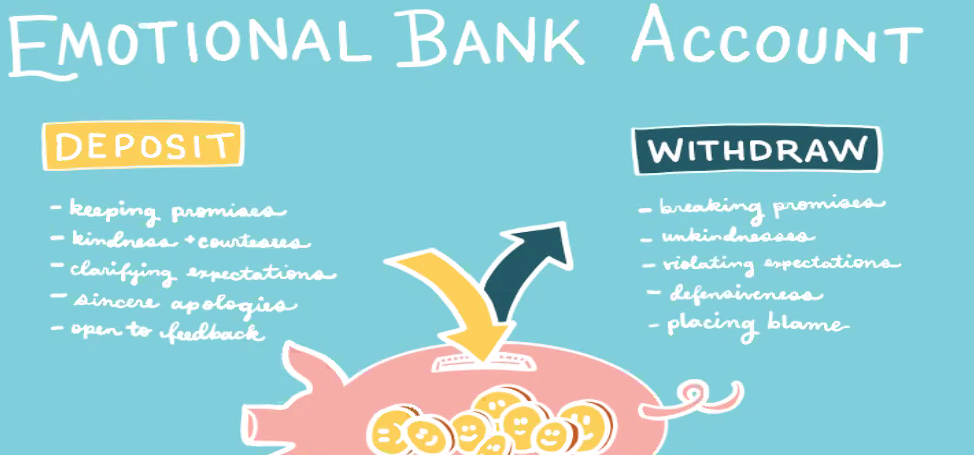
The survival state is the most unregulated state and in it, students may be triggered by fight, flight and fright or feel helpless and in trouble, Factors that contribute to this can be the teacher’s tone, relationship until now, or when the emotional bank account is imbalanced. 

A picture containing diagram

Description automatically generated

For the teacher, the first step to balance the equation is to regulate ourselves by breathing and gaining the reassurance that we can properly manage the situation. Waiting until a calmer moment will help handle the situation more mindfully. 

For the student, use the following techniques to help them:

  • Encourage them to breathe
  • Validate them in public
  • Have them spend time in a calming corner
  • Provide reassurance and empathy
  • Stay calm yourself as your calm is contagious
  • Remind them to be a STAR = Stop, Take a breath And Relax.

The three brain states correlate to the three states of engagement: regulate, relate and reason. The survival state may look like screaming, tantrum, avoidance, resisting eye contact, eye-rolling or not wanting to be touched. 

Steer clear of telling the student to calm down to avoid stressing them out further. We can only regulate or elevate others to the place that we are at, so if we are currently residing in the survival state, we will need to identify which stage we are in before responding. To promote self-awareness and relate to students, try to identify the triggers that put you into survival mode. 

Often we can just see the tip of the iceberg, but if we look deeper we can discern what the child is really saying. 

A picture containing graphical user interface

Description automatically generated

Empathy as a prerequisite 

The starting line for collaborative problem solving is learning how to empathize to try and regulate the child through a deeper understanding. There are tools and techniques to use to achieve this such as reassurance and reflective listening. 

When interacting with a student, make sure to open with a neutral statement such as, “I noticed that.” “Can you tell me more about what’s going on?” 

According to  Think: Kids, “Lagging skills are the reasons that a child is having difficulty meeting these expectations or responding adaptively to these triggers.” These are not about having teachers be diagnosticians but instead allows teachers to take a best guess as to what may be getting in a student’s way. 

It’s helpful to consider the skills you can identify that are lagging when a student is pulled into their survival state. Helping them figure it out can lead them in the right direction. 

Techniques to try

  • Deep breaths, draw feelings, model or vocalize to children what you are doing, and use a calming activity
  • An emotional state is our response to upset and can only be soothed through connection.
  • Stay with the child and calm them down until they can talk about it.

Behaviors in an emotional state

Sass, chutzpah, attention-seeking, attitude, testing and tears are just some of the major behaviors you will see in students. For the teacher, self-care, sharing with a helpful adult, and empathy can help work through emotional states. For the student, showing empathy, being “curious not furious,” giving jobs, choices, staying close and building the relationship are ways to help. 

Diagram

Description automatically generated

Collaborative problem-solving stages

The first stage of collaborative problem solving is empathy. We tend to insert our own thoughts when someone else is talking. Real empathy is being able to understand others from their perspective. Empathy is nonjudgmental, feeling with people. Rarely an empathic response begins with “at least.” Rarely can a response make something better. What makes it better is the connection felt through empathy. 

The executive state is the optimal state for problem-solving and learning. It frees us from past conditioning, attunes us to the feelings and experiences of others. The goal is to act out of rational ideas and respond from a place of calm and inspire the student to rationalize, problem-solve or come to a conclusion on their own (or with some guidance.) Getting into the executive state makes it possible when both sides are regulated. 

The second and third stage occurs when the child is regulated, shares adult concern and hears another perspective. This is when the problem-solving magic happens and together you can brainstorm solutions. 

Collaborative Problem Solving solves the problem durably, builds skills, builds connection and relationships. It teaches children to have long-term healthy response techniques, to not avoid conflict and to use every opportunity to learn or teach.

For more resources on the three brain states and collaborative problem solving, check out thinkkids.org and consciousdiscipline.com.

Week of learning campaign

Join the ATT’s week of community-wide inspiration & virtual learning

November 28, 2020 – December 6, 2020

Launching our annual campaign with lectures from world-renowned speakers and short videos from local educators all week long

Support the ATT annual campaign with a donation for our week of learning

Featuring:

Rabbi YY Jacobson

Motzaei Shabbos, November 28, 2020 @8PM: Keeping Positive in an Age of Uncertainty
34th Annual Rabbi Isaac Mayefsky Memorial Lecture
Sponsored by the Mayefsky Family in memory of Rabbi Isaac and Mrs. Florence Mayefsky z”l

Zoom link: https://zoom.us/j/94567994722

Rabbi David Fohrman

Sunday, December 6, 2020 @ 11AM: The Unfinished Story of Jacob’s Ladder
Sponsored by the Tanielle Miller Foundation by Ruth Rotenberg and Glenn Miller

Zoom link: https://zoom.us/j/94939500454

Support the ATT annual campaign with a donation for our week of learning

Contact Rabbi Uri Zimmerman with any questions.

Social and emotional learning strategies to benefit mental health needs

If there’s one lesson to take from 2020, it’s that the job of a teacher extends beyond just teaching. That mental health can affect student learning is well-known, but this year it’s that much greater. 

Fortunately for the ATT, in collaboration with Walder Education, Angela Searcy, Ed.D recently presented to ATT teachers how to implement social and emotional learning strategies to help students thrive in learning despite the extraordinary challenges of learning in a pandemic. 

Social and emotional learning (SEL) is the process through which children and adults understand and manage emotions, set and achieve positive goals, feel and show empathy for others, establish and maintain positive relationships, and make responsible decisions.

Helping students thrive 

For some teachers, being mindful of social and emotional learning may come naturally. If that’s not yet a strength, there are many tools and strategies teachers can implement to ensure students’ emotions aren’t standing in the way of learning.

A systemic approach to social and emotional learning intentionally cultivates caring, participatory, and evidence-based practices to actively involve all students in their social, emotional and academic growth.

In her book Push Past It! A Positive Approach to Challenging Classroom Behaviors, Dr. Searcy shares examples and explains where SEL fits within the mental health continuum. In her presentation, Dr. Searcy reviewed steps that support good behavior planning, outlined tools to help educators MATCH a strategy to their unique students and program, and shared what to expect at different phases of implementation.

Implementing SEL techniques 

It takes time to master any new teaching strategy, so a great starting point is a visit to the National Center for Pyramid Models Innovation  (NCPMI)’s  Practical Strategies for Implementing the Pyramid Model for social and emotional learning idea inspiration. 

Following are strategies to easily and effectively implement SEL into lesson plans. 

  1. Book Nook 

There are many popular books that can be read to children to support social emotional development and teach them about various emotions and responses to life’s daily events. 

book nook

Each book has a lesson or activity that is relayed in a positive and engaging manner with hands-on ways to embed social emotional skill building activities into everyday routines.

Check out this comprehensive children’s book list to teach about cultivating relationships and enhance positive behavior. 

  1. Keep in touch with student emotions 

There are countless visual tools to monitor or express how one is feeling emotionally. From feeling wheels or faces to charts, to greeting boards, to bulletin board mood meters samples, teachers can be in touch with the mood of their students. More importantly, this helps the students gain the awareness to be in touch with their own feelings. These concepts are effective from toddlers to teens and help build community in the classroom.

  1. Resolve conflict creatively 

Once students understand their emotions, they can progress to conflict resolution.

There are additional videos to help teachers guide their students in conflict resolution.

Coping and calming strategies with sentence starters are also effective ways to help children practice expressing empathy and feelings in daily situations. In the classroom, creating creative, peaceful and calming corners works for some students. 

By modeling these strategies for students, teachers can help inspire social emotional learning and help students thrive in learning whether it’s in the classroom or remote.